are you suffering?
i used to suffer. mostly i think my suffering was self-inflicted in quiet moments with “no people or conversations, no distractions, sober and no television, just [a] head on a pillow… that’s when the carnival kicks into high gear.”1 at the time, the phenomenon stanhope described in his 2007 special felt very relatable, even universal. the re-examination of every utterance one had ever made, the retrospective of every poor decision, the probe into every mistake, or rubbing a hand over notches left in the soul following the loss of loved ones; an emotionally taxing experience which had likely afflicted nearly every person that had ever lived on this planet for all of history. but by 2007 it was already over. it was finished. we had been freed by the benevolent saint jobs who drove away our suffering in slithering masses from the ireland of the mind. we just didn’t really know it yet.
before podcasters, we had podcasts
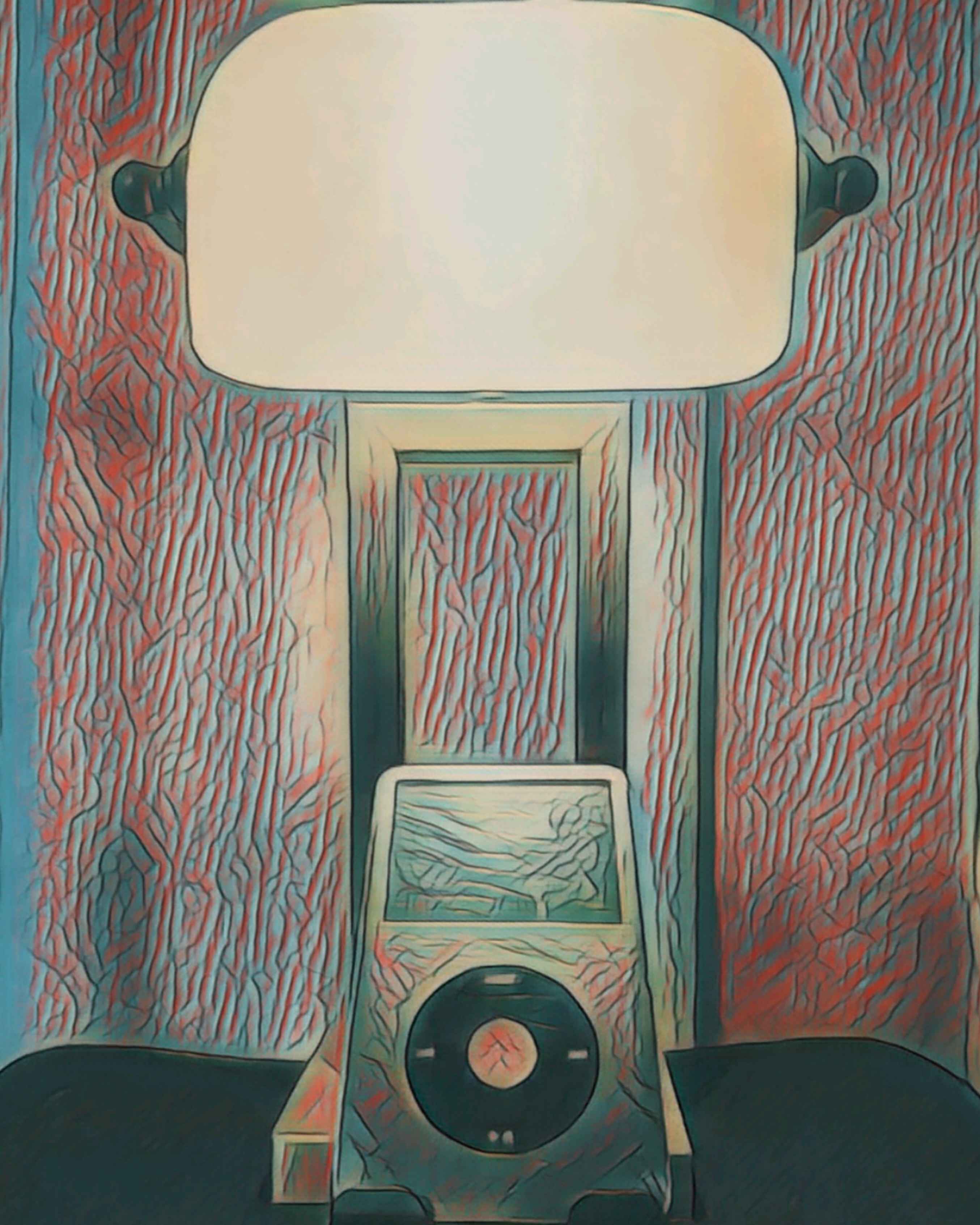
in the early days, podcasts were groundbreaking for legitimate operators who were only getting terrestrial radio up to that point. it felt like a fulfilled promise of the future to be handed this kind of agency for the low price hundreds of fucking dollars. an organized user could subscribe to their favorite shows on iTunes, leave an iPod connected to the ever-running family PC before bed, and throughout the night their favorite podcasts would be pre-loaded onto the device. the main issues with this were:
- it meant that one would be without an iPod for several consecutive hours (see: carnival) and,
- most, if not all podcasts were bad
so while the medicine had been discovered, it hadn’t yet been refined. for the sake of entertainment let’s say that it was the proliferation of cheap cellular data that made podcasts viable for people who were talented enough to warrant having one. back in the day the average person was not constantly online2, so most things on the internet were made for a very limited audience of ghouls, creeps, and the odd dork. once the cell breached the blood-brain barrier and normals joined the “consensual hallucination of cyberspace”3, it opened the door for content creators (non-pejorative) to tap into a burgeoning audience. funny and interesting people with real ambitions were now using the internet a lot. for a time it felt like the net had been gentrified, it felt fractionally more like a reflection of society rather than a massive rubbish bin utterly stuffed with pedantic men.4
the clumsy procedure of plugging in one’s iPod before bed and praying that the podcast fairies would summon sublime audio through a vast aetheric datascape, then guide it gently through a haggard off-white iPod cable from a nicotine stained gateway to dirtiest most scratched up iPod anyone’s ever seen began to look like a superstitious ritual from ancient times.
any hint of friction had been removed. no matter where the user went, they were tapped in. no data limits, no breaks, no carnival.
Created on 2026-03-06 at 19:13
Footnotes
-
Stanhope, Doug, performer. No Refunds. Directed by Milton Lage, Showtime, 2007 ↩
-
some of us were, and we sacrificed many hours that would have been better spent fostering deeper bonds with our loved ones on slow connections hunched over a CRT. ↩
-
Gibson, William. Neuromancer. Ace Science Fiction Books, 1984. ↩
-
I mean it was jammed. It is jammed. Completely jammed. Not only did someone clearly stomp it down a few times, there’s also a mountain on top of it, stacked up with great care but to a distressing height. It is so tall that the pile on top has actually well exceeded the height of the bin. One would be forgiven for thinking that a second one should have been added decades ago, because at least then even if none of the old heap got transferred over, it would stop getting bigger. But I read an article that said it wouldn’t matter even if we got 10 new bins today. They would all already have a bigger mountain than the original bin by 2050 because the problem gets exponentially worse every year. ↩